Sunday, November 11, 2007

Semiconductor Manufacturing Revisited

Because of the complexity involved in manufacturing semiconductor chips, I thought it would be worth providing some additional reading material in addition to the Applied Materials technical tutorials. Hardware Secrets and Tom's Hardware are both good sites for computer articles, so you may also want to check out their other articles sometime.


I have spent some time inside cleanroom environments, and they are quite an interesting place to be. The machinery is very expensive costing in the millions of dollars for many tools, and the air generally contains less than 10 particles ≥0.5 µm (microns) in diameter (200 times smaller than the size of a human hair). In layman's terms: If you have a job in which you work inside a cleanroom and you go to work and have allergies that morning, you will feel great inside the cleanroom because there are no particles (dust, pollen, etc.) to affect you! The air is kept clean by a huge air handler system that circulates a large volumne of air through HEPA filters that capture any particulate.


The last bit of information worth adding about semiconductor manufacturing is that it is a very complex environment from a production control perspective. Many products in the world are made by batch processes such as paper, chemicals, Coca-Cola, etc. On the other hand many products are made in discrete units with a lot of 1 (Cars are a good example). Semiconductors wafers are generally run together as a lot, but you sometimes split or merge wafers from that original lot and to a secondary lot. Additionally, in some tools you input a lot of wafers (say a quantity of 25), but the tool processes the wafers individually (these tools are fittlingly called single wafer processors). To make things even more difficult there are sometimes batch tools such as diffusion furnances (as shown on the right) where you place multiple lots into the furnace and wait several hours for the processing to finish. In summary, line balancing is very important and can make a large impact on how smoothly the wafers are processed!

So on to the articles:
How Chips are Manufactured brought to you by Hardware Secrets
Semiconductor Production 101brought to you by Tom's Hardware

Friday, November 9, 2007

Direct from Dell.... (Austin, TX)

Dell has a very fascinating history, business model, and supply chain strategy and the company is well known in the computer arena. Dell has had suffered from some issues over the last few years, but overall the company's operations are solid. This Dell Plant Tour Video is a little dated, but it is still very interesting to see the general framework at the Dell factory.

I happen to have studied Dell very closely since about 2001, and I was lucky enough to attend many presentations by Dell employees (and even know several). A few things to note are that as of 2004-2006 Dell operated under the following structure:
  • Laptops are made overseas (generally in Taiwain) by ODMs and air freighted to the US. This likely is due to labor savings and the density to price ratio.
  • Dell's Topfer Manufacturing Center in Austin, TX (TMC is building PN2) assembles Desktop PCs while the building next door (PN1) builds servers.

Additionally, since this video was made many changes have been implemented at TMC:

  • Barcode scanning has been changed to RFID on the totes that move around the factory.
  • Inventory is kept low because Dell does not keep a component inventory warehouse themselves. Their components are kept at consignment warehouses next door where the suppliers own the inventory until it is pulled for a customer order.
  • The Boxing line is still performed manually in some instances, but for certain platforms the High Velocity Kitting line completes the process via automation.


Thursday, November 8, 2007

Facility Showcase: BMW Leipzig

BMW has a short yet detailed video on their facility in Leipzig, Germany. It discusses the thought process that went into deciding facility attributes, and also provides some insight into BMW as a whole. The robotics in the body shop, paint shop, welding, etc. are amazing to watch, and the facility layout is also quite impressive. From what I can tell there are few if any paper travelers at Leipzig, and the operation itself appears world class.


Wednesday, November 7, 2007

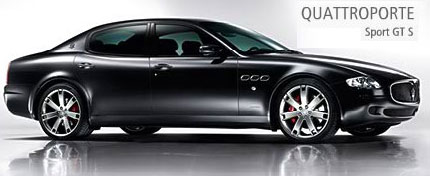
Maserati: Italian Luxury

Maserati has an interesting history with ownership changing many times over the years. Within approximately the last decade, Maserati has gone from Fiat ownership, to join Fiat/Ferrari ownership, to full Ferrari ownership, back to full Fiat ownership (which is even more interesting since Fiat owns Ferrari). Over this period Ferrari helped reinvigorate Maserati and even developed the engine and drivetrain which is shared amongst the different models.

Maserati's plant tour shows some great examples of component commonality because their lineup appears to have many common parts with different exterior styling to address very specific customer segments.


  • Quattroporte - Four Door sedan (Quattroporte means four doors in Italian)
  • GranTurismo - Hard Top Coupe (2+2)
  • GranSport - Hard Top Coupe (2+2)
  • Gransport Spyder - Two Seat Convertible; No back seat
  • Coupe - Hardtop Coupe (2+2)

In fact, per the video the only difference between the the Quattroporte and Granturismo is that the Quattroporte has a larger grille. Maserati only manufactures ~7,000-10,000 vehicles per year, but would like to increase that number as sales in North America increase.


Some interesting points from the Maserati Plant Tour video that I noted as I watched it were that:
  • Maserati has implemented a JIT methodology, and looked to have much of their information on the Paper travelers that move with each car.
  • Around the 3 minute mark the spokeswoman notes that the vehicle being shown is definitively an american car because of the cup holders!
  • Engines are tested as modules by Ferrari and also Final Tested in a finished car up to 250 kpm. Each car is then driven 80km over city streets, mountain roads, and highways.
  • If you pick up your car at the Maserati showroom you will find your car covered with a blue cover so you can unveil your car, open your champagne, and party with Maserati! You also get your own photographer so you can be assurred the event is documented. Note: Sounds very similiar to Ferrari to me!

Tuesday, October 30, 2007

Car & Driver: Aston Martin Gaydon Plant Tour

Aston Martin...... The brand often evokes thoughts of racing or, due to clever marketing, a connection to Bond.... James Bond. Whatever you think about the brand, you have to admit the cars are very stylish and nice all around (and they had better be with MSRPs from $113K-$255K!).

This Car & Driver Plant Tour shows you around the Aston Martin Plant at Gaydon, Warwickshire, England. There are 45 pictures with captions, so there is quite a bit to see regarding how Aston Martin's are manufactured. As always, there isn't too much direct information about the company's operations, but a good deal can be inferred about company methodologies by the facilities, personnel, and equipment. I couldn't find exact annual figures for Aston Martin production, but the volume is relatively low (somewhere between 1,000-2,000 vehicles per year). This is reinforced by the low automation in the factory, which also fits the "handmade, high quality" persona associated with the brand.